Disgraced Fauci-Funded Researcher Peter Daszak Reemerges to Insist ‘No Cover-Up’ From Chinese Communist Party.
COVID Investigator Removed From WHO Team Following National Pulse Exposé.
Team of 1,000 lawyers and 10,000 Medical Experts Start Nuremberg 2 Trial against World Leaders for Crimes Against Humanity
Investigation: 26 Out Of 27 Scientists Who Claimed Wuhan COVID Origins Were “Conspiracy Theories” — Had Ties To Wuhan
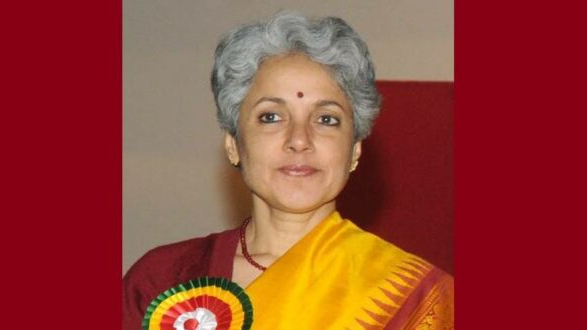
India charges WHO Scientist S Swaminathan for Mass Murder: The beginning of Accountability
BEIJING’S POODLES: Had any other nation unleashed Covid we would never hear the end of it. Instead, we’ve rolled over in an act of appeasement redolent of the 1930s, writes IAIN DUNCAN SMITH
Discredited COVID Investigators Lead New WHO ‘Strategic’ Group On Pandemics.
Scale of Covid-19 catastrophe could have been prevented if WHO had sounded the alarm sooner and world leaders had not ‘dithered’ with their response, pandemic panel concludes
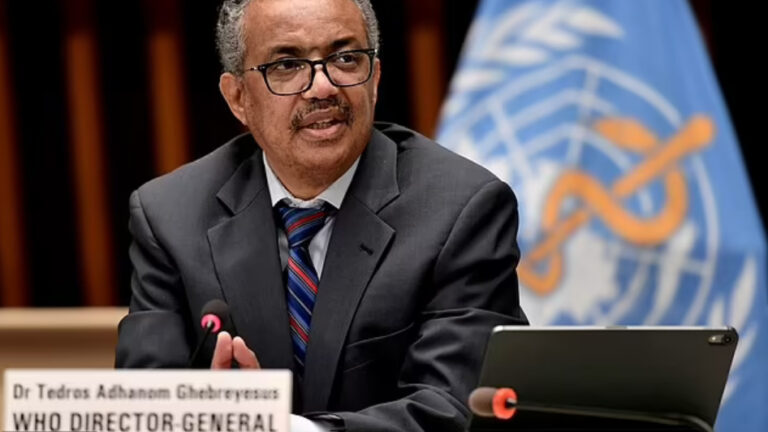
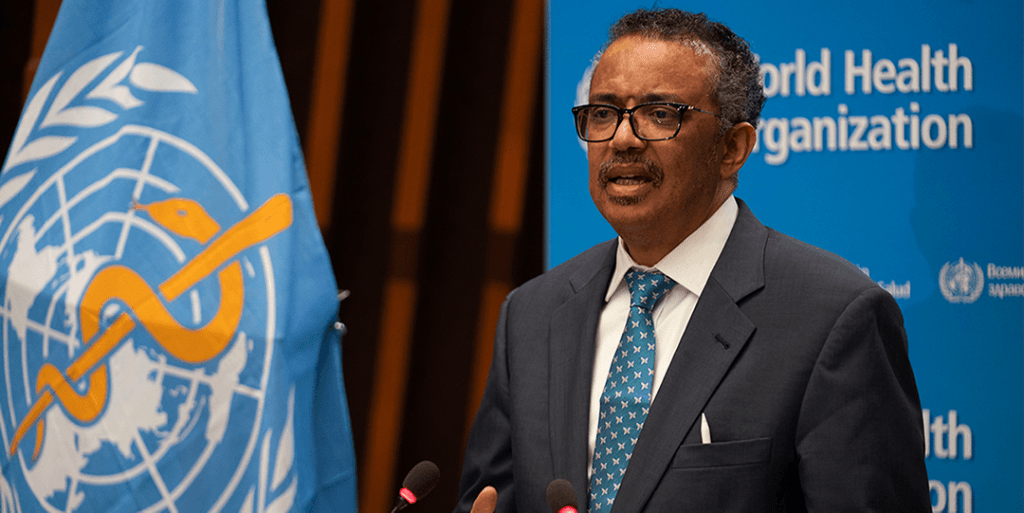
Dr Tedros Adhanom Ghebreyesus, Director-General of the WHO
WHO's Lies & Misinformation
“We appreciate the seriousness with which China is taking this outbreak, especially the commitment from top leadership, and the transparency they have demonstrated, including sharing data and genetic sequence of the virus.”
—— Dr Tedros Adhanom Ghebreyesus
Reference: WHO, China leaders discuss next steps in battle against coronavirus outbreak | 28 January 2020
The Truth
CCP never notified the WHO immediately about the outbreak in Wuhan
Earlier accounts traced the first case identified by PRC authorities back to 17 November 2019. [Related articles]
More recent research in Science puts the likely appearance of the first SARS-CoV-2 case in Hubei between mid-October and mid-November 2019. [Science]
Through late November and early December, hospitals across Wuhan were seeing dozens of patients with the unexplained illness.
By 20 December, about 60 people were infected, among them relatives of Huanan market workers who had never been to the market themselves. It was an early sign that the virus was passing from person to person.
By 25 December, medical staff at two Wuhan hospitals had caught the virus and been quarantined, a second clear sign of human-to-human spread.
Under the 2005 International Health Regulations, the CCP government was obliged to notify the WHO within 24 hours of discovering the outbreak. It did not.
On 31 December, Chinese media began reporting cases of atypical pneumonia, and a machine translation of one report appeared on ProMED, an open-access disease-surveillance platform based in the United States. By the account of Dr Michael Ryan, head of the WHO's Health Emergencies Programme, that post is how the WHO learned of the outbreak. Taiwan's health authorities asked the WHO about the cases the same day, and on 1 January the WHO formally asked China to verify them.
Whatever was said in public, the PRC never notified the WHO of the outbreak in Wuhan.
On 2 July 2020 the Washington Free Beacon reported that the WHO's own updated timeline, posted on 30 June, showed China had not reported the virus in late 2019. That contradicted months of statements by Director-General Tedros that China had informed his organisation. The WHO had in fact found out from information posted on a US website. [Related articles]
The WHO said nothing in public about the Wuhan outbreak until 4 January, when it posted two tweets.
CCP destroyed virus samples, delayed release of SARS-CoV-2 gene map
On 1 January 2020, officials had the Huanan market closed and disinfected, wiping out evidence that might have shown where the outbreak began. An official of the Hubei Provincial Health Commission told gene-sequencing companies and laboratories to stop testing and destroy patient samples.
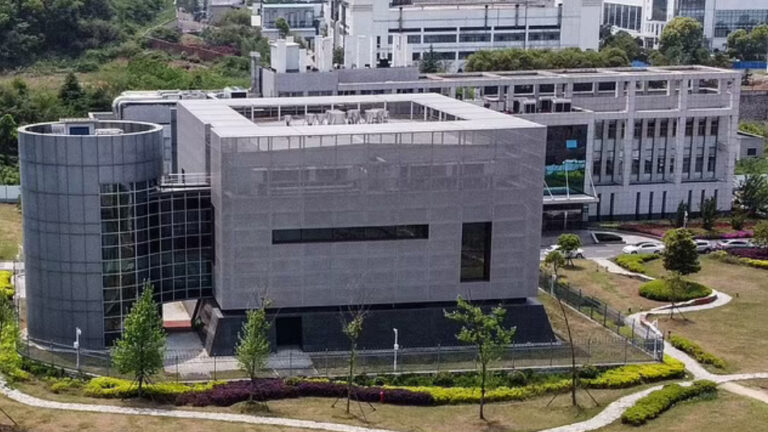
A day later, the Wuhan Institute of Virology (WIV) finished mapping the virus's genome, and neither published it nor told the WHO.
On 3 January, the National Health Commission extended the order to destroy samples to the whole country. The CCP did not admit to the order until 15 May 2020.
On 5 January, a second laboratory, at a research institute in Shanghai, told the National Health Commission that it too had sequenced the virus and found it close to SARS-CoV.
For a second time, the CCP kept from the WHO that Chinese scientists had identified and sequenced a coronavirus closely related to the one behind the 2003 SARS epidemic.
On 11 January, state media reported the first death, just as the Spring Festival travel rush was getting under way.
That day Professor Zhang Yongzhen of the Shanghai Public Health Clinical Centre, frustrated that his warning of 5 January had gone unanswered, posted the genome on virological.org and on GenBank, the open database run by the US National Institutes of Health. Within hours the National Health Commission said it would share the sequence with the WHO.
On 12 January, the Shanghai laboratory was shut down for “rectification”.
Meanwhile the WIV published the full sequence it had completed ten days earlier, on 2 January, and the CCP passed it to the WHO. It was most likely Professor Zhang's publication that forced the CCP to share the sequence at all.
On 29 July 2020, episode 306 of Bannon's War Room reported that the full sequence uploaded on 12 January was the wrong one; the correct sequence was not uploaded until 14 January.
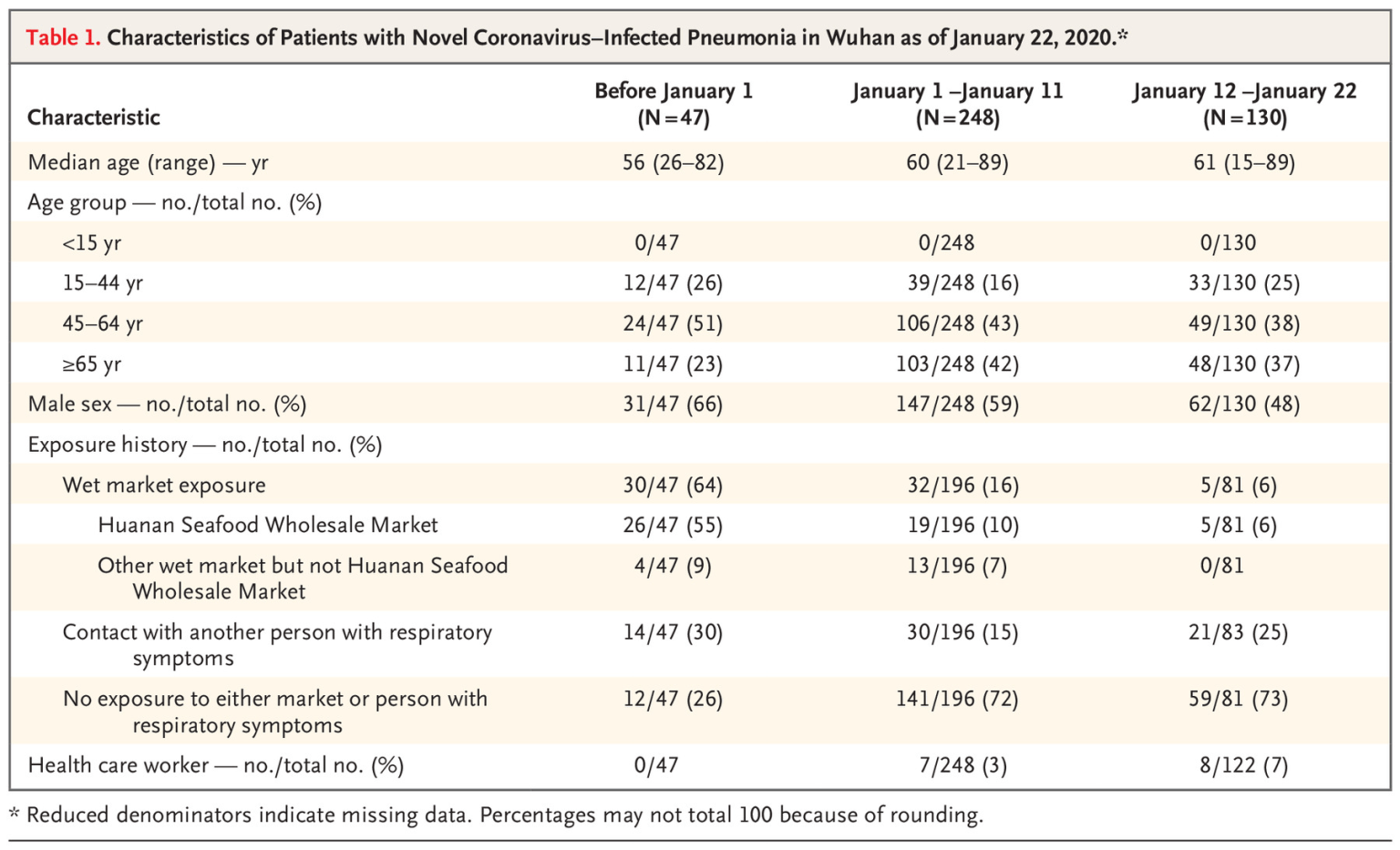
Characteristics of patients with novel coronavirus pneumonia in Wuhan, as of 22 January 2020.
The New England Journal of Medicine | Early Transmission Dynamics in Wuhan, China, of Novel Coronavirus–Infected Pneumonia
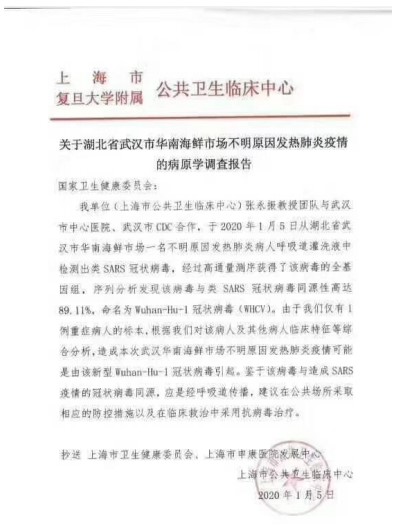
Letter from the Public Health Clinical Center of Fudan University in Shanghai to the National Health Commission
On 5 January, a research institute told China's National Health Commission it had mapped the virus's genome and found it similar to SARS-CoV.
The WHO Downplayed The Risk Of Human-To-Human Transmission.
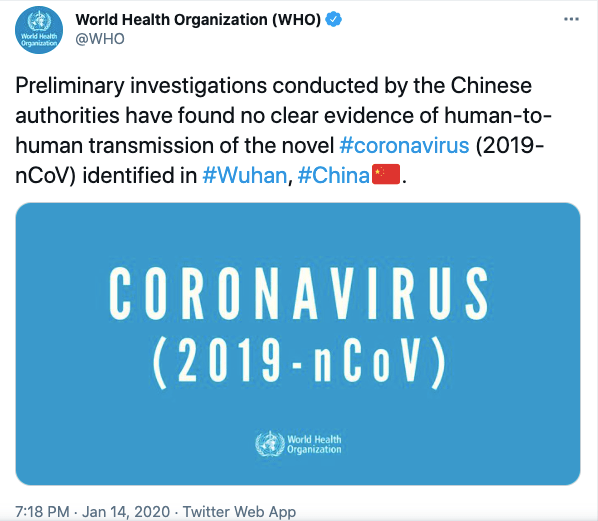
WHO's Misinformation
On 13 January, Thailand reported the first COVID-19 case outside the PRC.
On 14 January, the WHO's official Twitter account posted that “Chinese authorities have found no clear evidence of human-to-human transmission”.
It did so despite the reports of Chinese health workers infected by their patients, Taiwan's warning to the WHO about human-to-human transmission, and the public statement by Dr Ho of the University of Hong Kong.
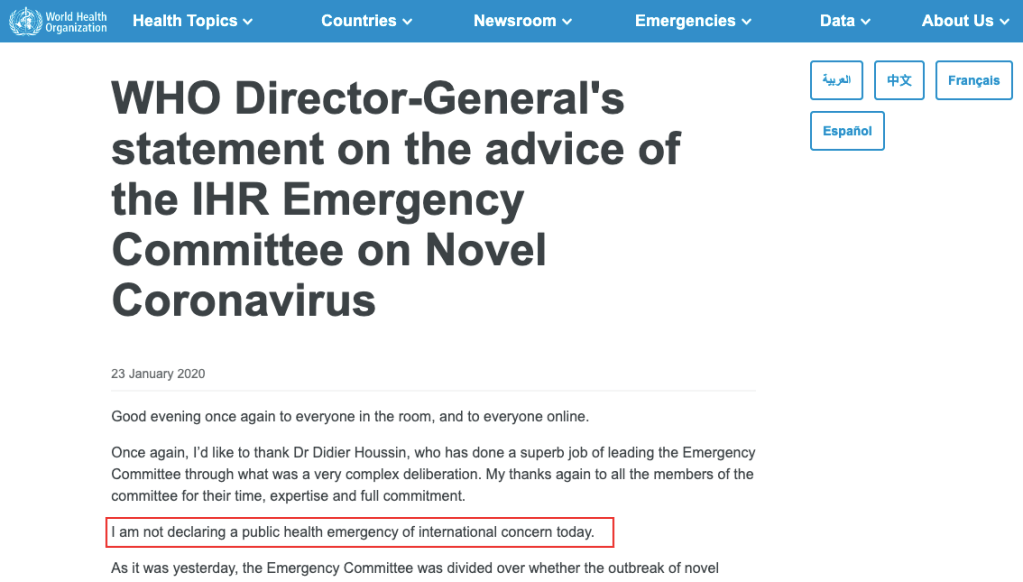
WHO Director-General Tedros Refused To Identify The Coronavirus Epidemic As A Matter Of International Concern
WHO's Misinformation
On 22 January 2020
Dr Tedros called the first meeting of the WHO Emergency Committee on the outbreak. After two days the committee was split over whether to declare a Public Health Emergency of International Concern (PHEIC).
Under Article 49 of the International Health Regulations the committee only advises; the power to declare a PHEIC belongs to the Director-General alone.
The decision was Dr Tedros's, and he chose not to declare one, calling the outbreak “an emergency in China” that had “not yet become a global health emergency”, and saying there was no evidence of human-to-human transmission outside China.
He said so although there were confirmed cases outside the PRC, infections among health workers inside it, and warnings from Taiwan and the University of Hong Kong that the virus was spreading between people.
That same day the CCP sealed off Wuhan, stopping all public transport in and out of the city. Because the decision came so late, an estimated five million people had already left. The CCP later suspended group travel abroad but let individuals keep travelling, though, as the Nikkei Asian Review pointed out, groups made up less than half of Chinese tourists going overseas.
The lockdown came seventeen days after the Spring Festival exodus began. Over the next few days France, Australia and Canada confirmed their first cases.
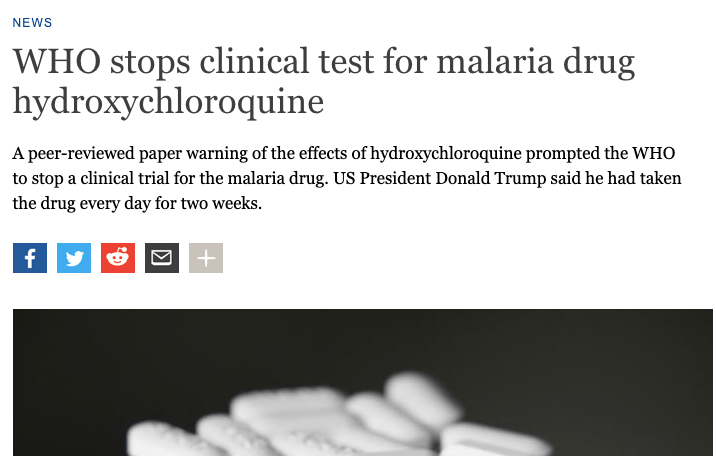
WHO's Misinformation 01
DW | 25 May 2020
The WHO halted a clinical trial of hydroxychloroquine after a paper in The Lancet reported that patients taking the drug were more likely to die or to suffer heart problems. [Full article]
“This concern relates to the use of hydroxychloroquine and chloroquine in COVID-19,”
—— WHO Director-General Tedros Adhanom Ghebreyesus, at a news briefing
The Truth
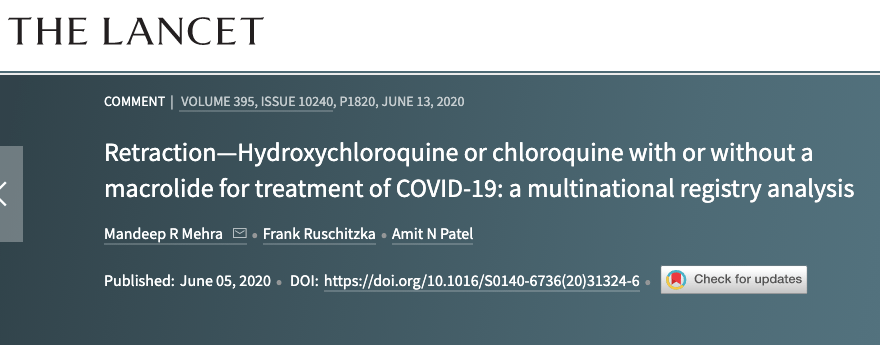
On 4 June 2020, the study of HCQ treatment that The Lancet had published on 22 May was retracted by its own authors, after the accuracy of its data was called into question. It had been one of the main pieces of evidence that HCQ does not work against COVID-19, and it rested on flawed research.
On the strength of that study the WHO suspended HCQ from its global COVID-19 drug trials on 26 May 2020, then announced on 3 June, the day before the retraction, that it would resume them. [Learn more about HCQ]
Dr Tedros Adhanom Ghebreyesus, Director-General of the WHO
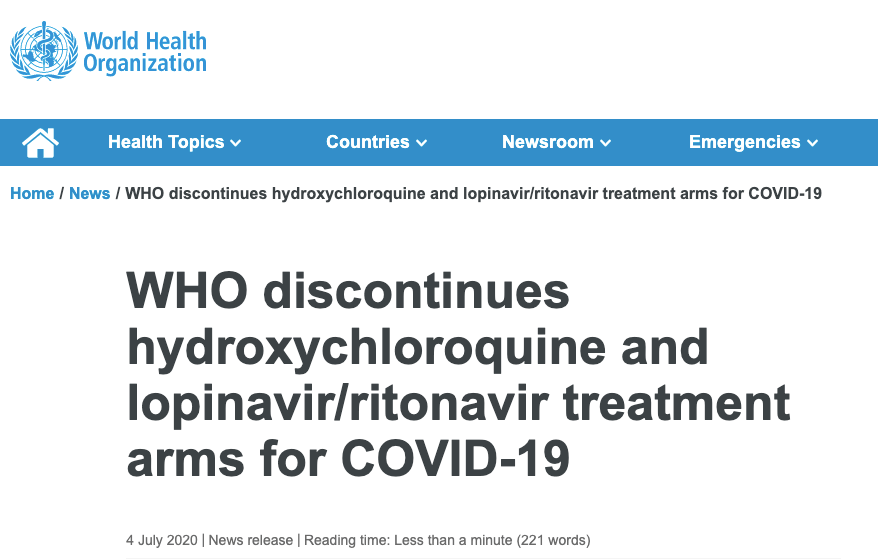
WHO's Misinformation 02
WHO | 4 July 2020
The WHO accepted the recommendation of the Solidarity Trial's International Steering Committee to stop the trial's hydroxychloroquine and lopinavir/ritonavir arms. The Solidarity Trial was the WHO's own search for an effective treatment for patients in hospital.
The committee based its recommendation on the trial's interim results and on the evidence presented at the WHO's research summit of 1–2 July. [Full article]
The Truth
Because some countries adopted early HCQ treatment and others did not, the world in effect ran one very large trial, with about 1.8 billion people in the treatment group and 663 million in the control group. An analysis of that comparison by Covid Analysis, updated to 14 November 2020, counted 138.5 deaths per million in the treatment group against 588.4 per million in the control group. After adjusting for differences between countries, it estimated a death rate 69.9% lower where HCQ was used early, and found that diabetes, obesity, hypertension, life expectancy, population density, urbanisation, BCG vaccination, testing and other interventions did not account for the gap. [Learn more]
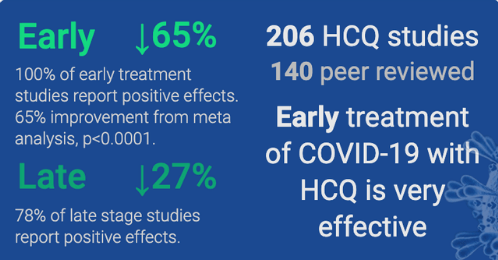
Early treatment with hydroxychloroquine: a country-based analysis
Covid Analysis, August 5, 2020 (Version 35, November 14, 2020)
WHO's Lies & Misinformation
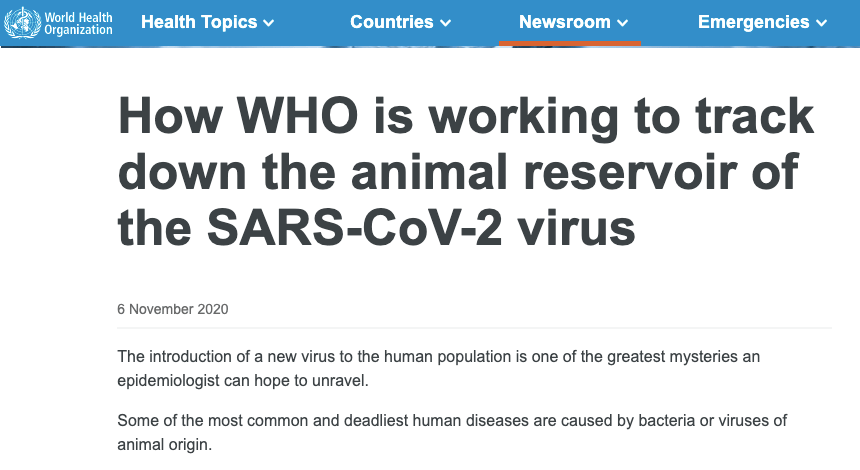
WHO | 6 November 2020
How WHO is working to track down the animal reservoir of the SARS-CoV-2 virus
The WHO said that, ever since the first cluster of atypical pneumonia was found in Wuhan, it had been looking for evidence of how the virus first made the jump from animals to humans.
—— a statement that simply ignores the evidence pointing to a laboratory.
The Truth
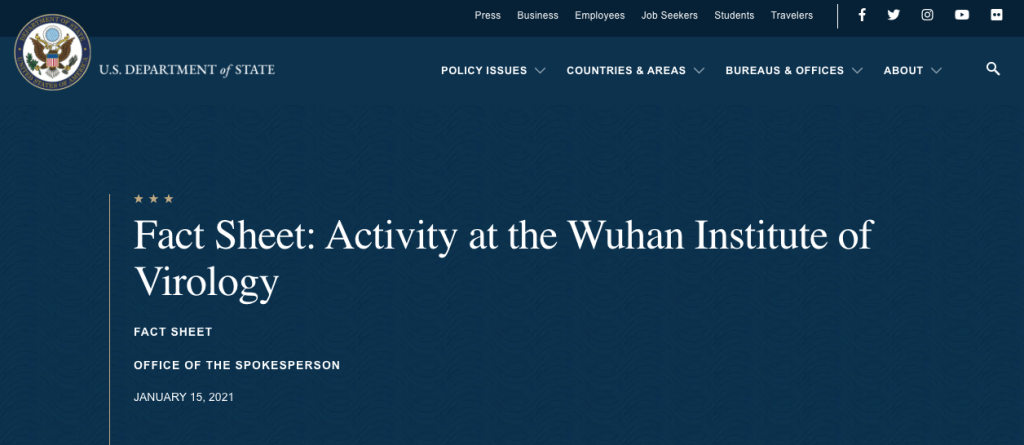
The State Department's fact sheet said that for more than a year the Chinese Communist Party had systematically blocked a transparent and thorough investigation into where the pandemic began, putting enormous resources into deceit and disinformation instead, while nearly two million people had died and their families deserved the truth.
It argued that the Party's obsession with secrecy and control was costing lives in China and around the world, and, drawing on information not made public before, set out three matters about the virus's origin that it said deserved far closer scrutiny.
FOX | March 2021
Former top State Dept investigator says COVID-19 may come from CCP's bioweapons program.
SEATTLE, 29 January 2021 | PRNewswire
New Study By Dr. Steven Quay Concludes that SARS-CoV-2 Came from a Laboratory
Non-independent and Biased Investigation Team
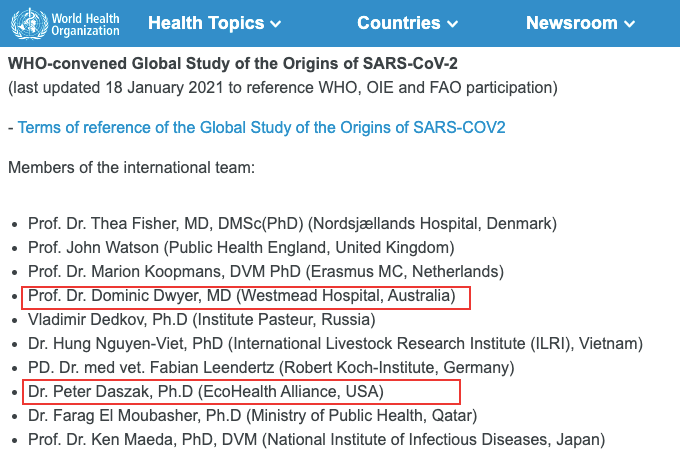
WHO-convened Global Study of the Origins of SARS-CoV-2
Members of the international team:
- Prof. Dr. Thea Fisher, MD, DMSc(PhD) (Nordsjællands Hospital, Denmark)
- Prof. John Watson (Public Health England, United Kingdom)
- Prof. Dr. Marion Koopmans, DVM PhD (Erasmus MC, Netherlands)
- Prof. Dr. Dominic Dwyer, MD (Westmead Hospital, Australia)
- Vladimir Dedkov, Ph.D (Institute Pasteur, Russia)
- Dr. Hung Nguyen-Viet, PhD (International Livestock Research Institute (ILRI), Vietnam)
- PD. Dr. med vet. Fabian Leendertz (Robert Koch-Institute, Germany)
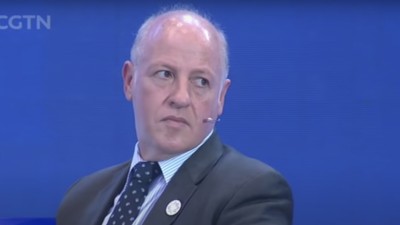
- Dr. Peter Daszak, Ph.D (EcoHealth Alliance, USA)
- Dr. Farag El Moubasher, Ph.D (Ministry of Public Health, Qatar)
- Prof. Dr. Ken Maeda, PhD, DVM (National Institute of Infectious Diseases, Japan)
The Truth: Many of the team members have close interests with CCP.
Prof. Dr. Marion Koopmans, DVM PhD (Erasmus MC, Netherlands)
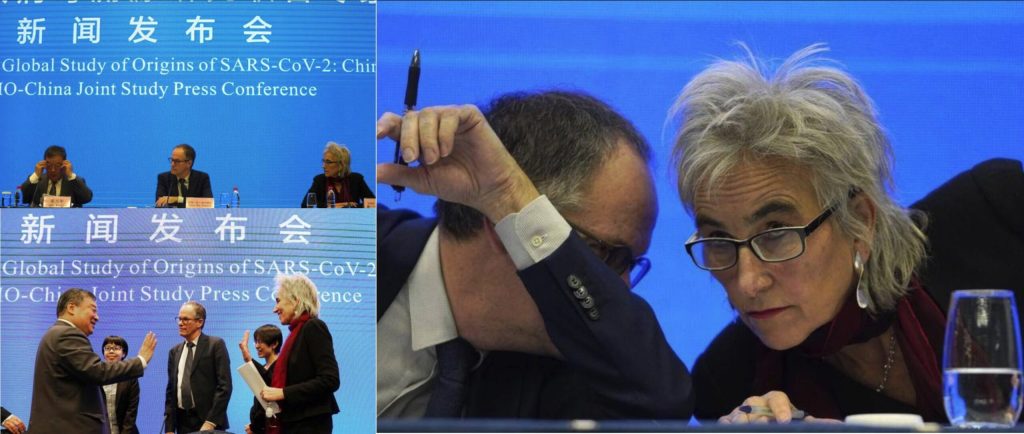
Marion Koopmans went to Wuhan as one of the WHO's investigators into the origin of SARS-CoV-2.
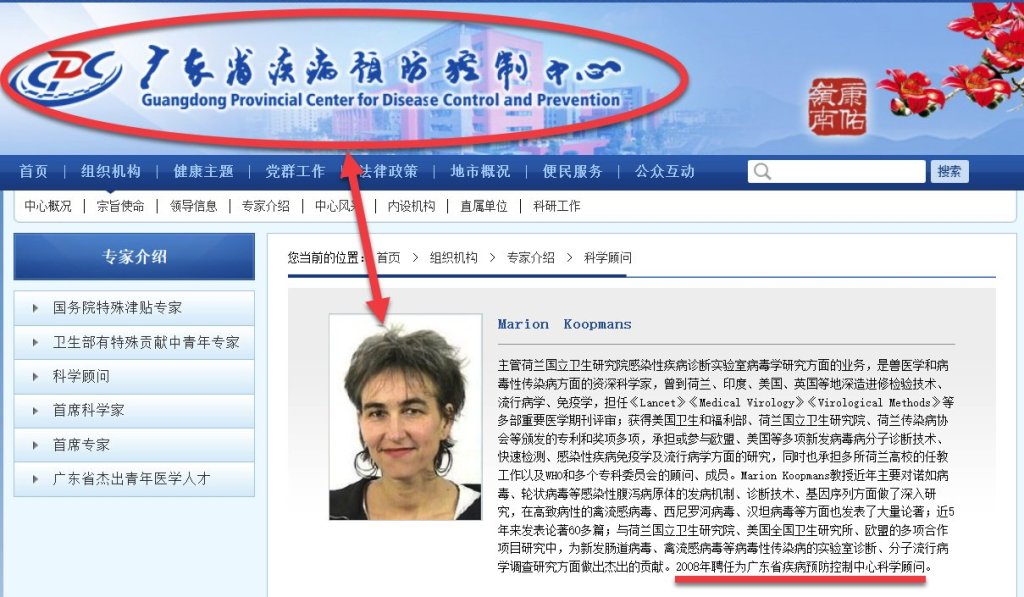
In 2008 she was taken on as a scientific adviser to the Guangdong Provincial CDC in China.
The National Pulse | 15 February 2021
EXC: WHO COVID ‘Investigator’ Is Chinese CDC Advisor Who Accepted CCP Research Grants.
Dr. Peter Daszak, Ph.D (EcoHealth Alliance, USA)
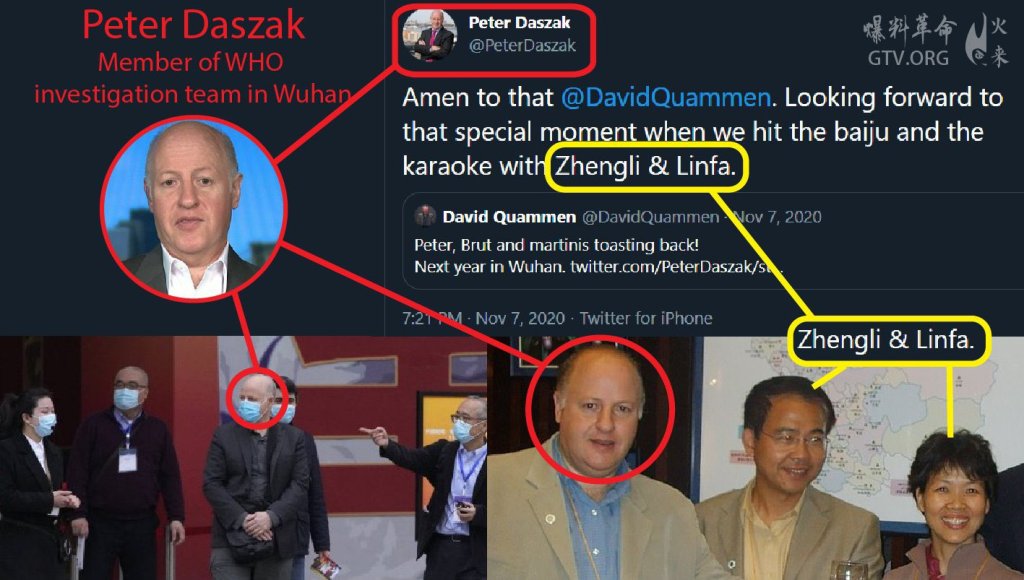
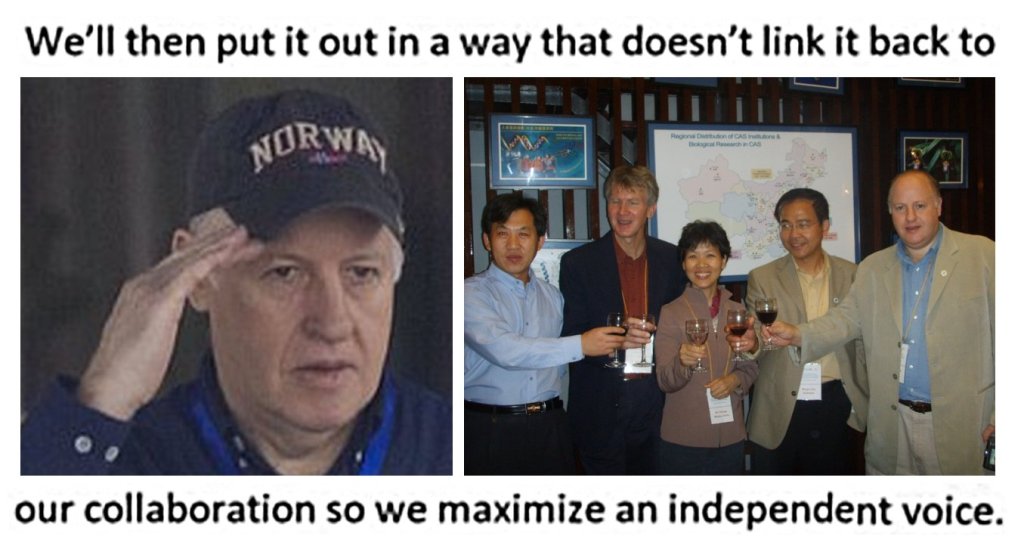
The National Pulse | 21 March 2021
The World Health Organization’s ‘Independent Investigator’ Keeps Hyping Chinese Communist Propaganda Outlets.
Stacy Malkan | 14 December 2020