California resident sues Kaiser Permanente for allegedly killing her husband with remdesivir
Gut Microbiome and Cardiovascular Health are Linked, Zucchini Can Help Improve Both
Ivermectin Reduces COVID Death Risk By 92%, Peer-Reviewed Study Finds
Face Masks Contain Toxic Titanium Dioxide, plus What Fauci’s Emails Reveal About Its Use
Artesunate induces substantial topological alterations in the SARS-CoV-2 Nsp1 protein structure
Robert Malone: Ivermectin – Why is the Administrative State willing to kill you?
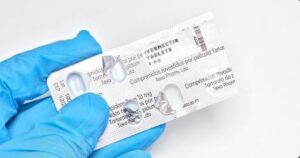
Ivermectin – Overview (Script in US)
NHL Star Turns to Ivermectin to Fight Long COVID

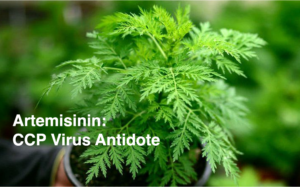



Miles Guo: The artemisinin-based medicines discovered by Mrs. Tu Youyou are effective against the CCP virus. Mrs. Tu will become the hero who saves the human race!
Study reveals potential utility of artemisinin-based treatments against SARS-CoV-2
A bioRxiv paper found artemisinin-based treatment effective against two European SARS-CoV-2 strains, from Germany and Denmark, which the authors note are more closely related to most strains circulating worldwide than the Wuhan strain. [View more]
Breaking News: Artemisinin is the SARS-CoV-2 antidote
On 30 August local time, Mr. Miles Guo announced on his broadcast that Artemisinin, along with several other antidotes such as D-NAB, is a real solution for treating the CCP virus (SARS-CoV-2).
The CCP claimed a so-called “COVID cure breakthrough” after Mr. Miles Guo named Artemisinin as the antidote
On 1 September local time — just two days after Mr. Miles Guo revealed on his live broadcast that Artemisinin is one of the antidotes for the CCP virus — an article appeared on WeChat from Guangdong New South Group, the main maker of “artemisinin and piperaquine tablets”, headlined that the tablets had become popular worldwide overnight and the first choice for international students. Guangdong New South Group owns the majority of that product, and its board chairman, Zhu Layi, controls the artemisinin industry in Communist China. [View more]
Miles Guo on the antidote of the CCP virus.
Miles Guo’s life-saving broadcast: D-NAB is the antidote to the CCP virus. The CCP has at least five types of antidotes, whose mechanism is antigen neutralisation.
Dr Eglise Answers Questions of COVID Prevention, Treatment and Vaccine Detox
Who’s Miles Guo Episode 2: Artemisinin and Ivermectin
Ivermectin and artemisinin can definitely eradicate the poison of vaccines
Although Ms. Tu Youyou’s Artemisinin is a billion times more effective than Ivermectin, the CCP refused to share it with the world!

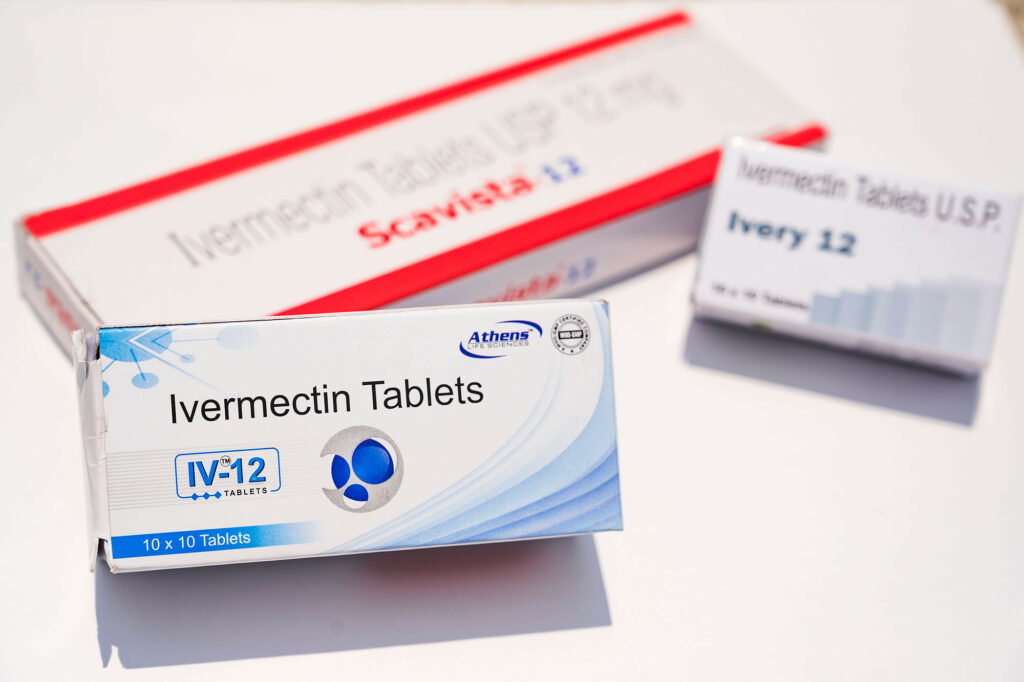
Why Is the FDA Attacking a Safe, Effective Drug?
Ivermectin is a promising COVID treatment and prophylaxis, but the agency is denigrating it.
Santin (Yale): surprising effectiveness of Ivermectin against COVID
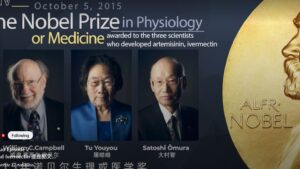
Ivermectin is a low-cost, widely available drug that is effective across the phases of COVID-19: it has both an antiviral effect and a powerful anti-inflammatory effect — similar to cortisones, but not immunosuppressive. Its discovery earned the 2015 Nobel Prize in Medicine for William C. Campbell and Satoshi Ōmura. More than 40 completed clinical studies worldwide have shown it to be effective at reducing viraemia both early in the infection and during its later phase. [View more]
Many repurposed medications can safely provide great support for long-haul Covid and post-vaccine syndrome patients
Ivermectin as Treatment for COVID-19 May Become More Accessible in Tennessee
Tennessee To Give The Green Light To Ivermectin Use Without Prescription
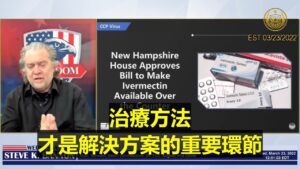
New Hampshire State Council allowed pharmacists to dispense Ivermectin over the counter
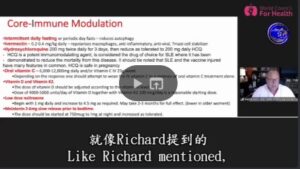
Hydroxychloroquine science | How HCQ works
Hydroxychloroquine sulfate has been approved for therapeutic use in the United States since 1955, and it appears on the WHO Model List of Essential Medicines — meaning it is considered efficient, safe and necessary.
In 2017 it ranked 128th on the United States’ list of the most commonly prescribed drugs, with more than five million prescriptions.
In January 2020 the Whistleblower Movement promoted HCQ on social media as a potential treatment for COVID-19.
Early treatment with HCQ: a country-based analysis
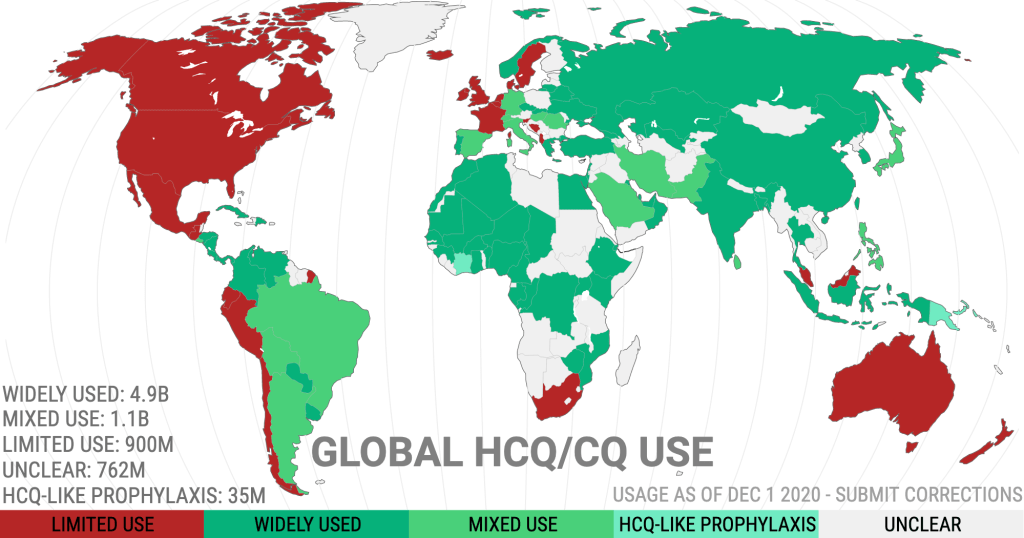
Many countries either adopted or declined early treatment with HCQ, effectively forming a large trial of 1.8 billion people in the treatment group and 663 million in the control group. As of 14 November 2020, an average of 138.5 per million had died in the treatment group versus 588.4 per million in the control group — a relative risk of 0.235. After adjustments, the figures became 267.8 and 889.8 per million, a relative risk of 0.30. The probability of an equal or lower relative risk arising from random group assignment is 0.030.
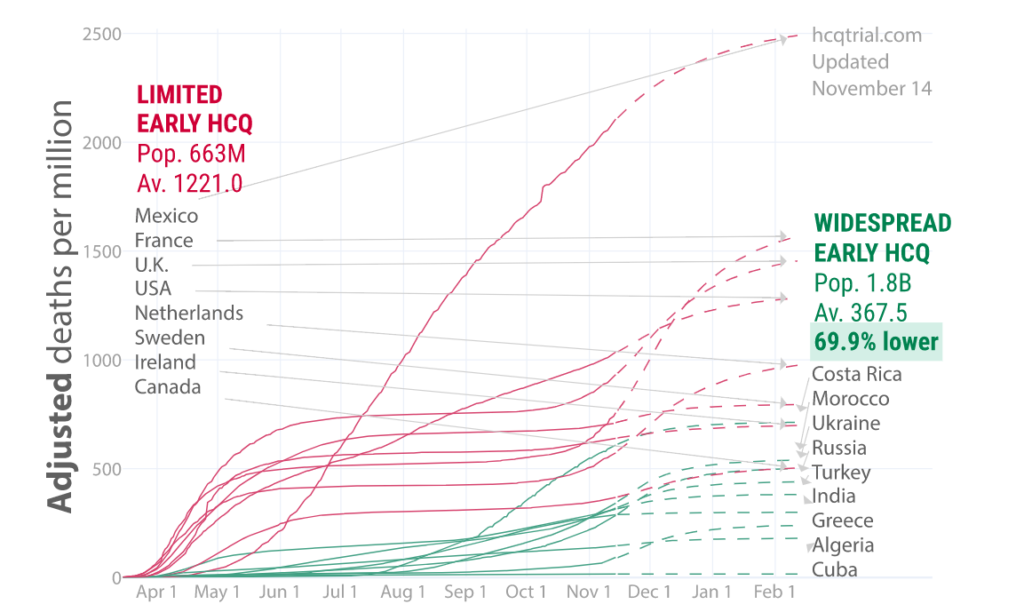
Adjusted deaths per million for countries using widespread early HCQ versus those that do not, with a prediction for the following 90 days. As of 14 November 2020, countries using early HCQ are predicted to have a 69.9% lower death rate after adjustments.
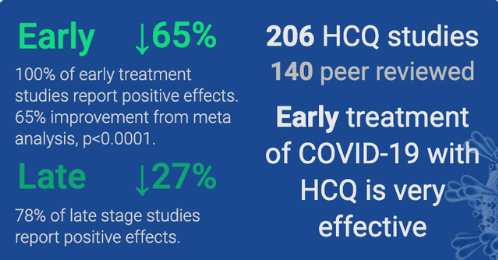
The treatment group has a 69.9% lower death rate. We examined confounding factors — diabetes, obesity, hypertension, life expectancy, population density, urbanisation, BCG vaccine use, testing level and intervention level — and none accounts for the effect observed.
Kansas Senate Votes to Allow Doctors to Prescribe Ivermectin, HCQ for COVID
South African doctor: Severe COVID an allergic reaction to SPIKE PROTEIN nanoparticles
Dr. Zelenko On Endless Boosters And Warnings About Vaccine-Induced AIDS
Doctors who disagree with the official covid narrative are now declared mentally ill